.webp)






Introduction
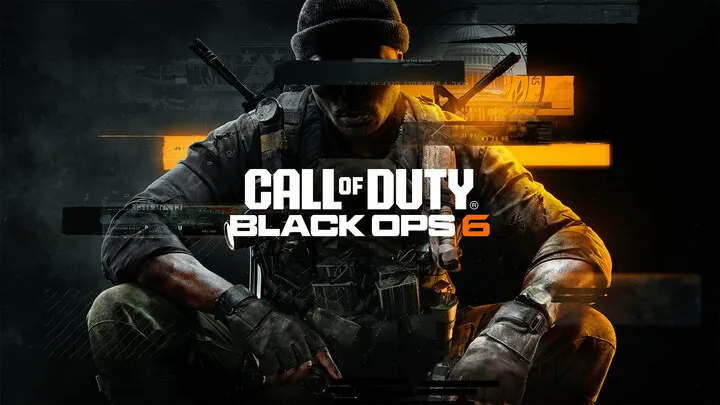
Call of Duty Black Ops 6 takes a bold step away from traditional military storytelling by focusing on psychological warfare as its central theme. Instead of simply placing players in large-scale battles, the game explores manipulation, memory distortion, and the fragile nature of perception.
Set in a world shaped by covert operations and hidden agendas, the campaign immerses players in missions where truth is constantly questioned. You are not just fighting enemies—you are navigating layers of deception, both external and internal.
Unlike previous entries, the game uses narrative design, level structure, and gameplay mechanics to create a sense of uncertainty. This makes every mission feel less like a straightforward objective and more like a psychological test.
1. A Campaign Built on Uncertainty
Black Ops 6 constructs its campaign around instability. Missions rarely begin with clear explanations, and objectives often shift mid-mission without warning.
Players are placed into situations where context is missing, forcing them to interpret events on their own. This creates a constant feeling of doubt.
Narrative Instability
The story unfolds in fragments rather than a continuous timeline:
- Missions feel disconnected at first
- Key information is intentionally withheld
- Flashbacks blend into present events
Emotional Impact
This structure creates tension in a unique way:
- Players question their own understanding
- Trust in the narrative is weakened
- Every reveal feels uncertain rather than definitive
2. Memory as a Core Gameplay Element
Memory plays a central role in Black Ops 6—not just in storytelling but in gameplay itself.
Players revisit locations that appear altered, suggesting that what they are experiencing may not be entirely real.
Shifting Environments
Environments subtly change between visits:
- Objects move or disappear
- Layouts feel familiar but incorrect
- Visual details contradict previous experiences
Cognitive Engagement
This forces players to:
- Pay closer attention to details
- Question what they remember
- Engage more deeply with the environment
3. The Illusion of Player Control
One of the most fascinating aspects of the game is how it manipulates the player’s sense of control.
While players believe they are making decisions, many outcomes are predetermined.
Hidden Design Choices
The game uses subtle techniques:
- Limited branching paths that converge
- Dialogue choices with similar outcomes
- Scripted events disguised as player-driven
Psychological Effect
This creates a powerful illusion:
- Players feel responsible for outcomes
- Realize later that control was limited
- Experience a sense of manipulation
4. Interrogation as Interactive Storytelling
Interrogation scenes are a major highlight of the campaign.
Instead of passive cutscenes, players actively participate in these moments.
Interactive Mechanics
During interrogations, players can:
- Choose dialogue options
- Apply pressure or remain calm
- Decide how far to push a subject
Narrative Consequences
These choices influence:
- Character relationships
- Information revealed
- The tone of the story
5. Dual Identity and Character Fragmentation
The protagonist in Black Ops 6 is not a stable figure.
Throughout the campaign, players begin to question who they are actually controlling.
Identity Conflicts
The game introduces:
- Conflicting memories
- Contradictory motivations
- Unreliable internal dialogue
Player Experience
This leads to:
- A blurred line between player and character
- Emotional detachment from reality
- A deeper psychological connection to the story

6. Environmental Storytelling and Hidden Clues
Black Ops 6 relies heavily on environmental storytelling rather than exposition.
Details hidden within levels provide insight into the larger narrative.
Subtle Clues
Players may notice:
- Documents and recordings
- Symbolic imagery
- Repeated visual motifs
Exploration Rewards
Careful observation reveals:
- Hidden story layers
- Character backstories
- Connections between missions
7. Sound Design and Psychological Tension
Sound plays a critical role in shaping the player’s emotional experience.
The game uses audio not just for realism but for psychological impact.
Audio Techniques
Key elements include:
- Distorted voices
- Sudden silence
- Echoing sound effects
Immersive Effect
These techniques:
- Increase tension
- Create discomfort
- Reinforce the theme of instability
8. Nonlinear Mission Structure
Unlike traditional linear campaigns, Black Ops 6 experiments with nonlinear progression.
Missions can feel disconnected but are linked through deeper narrative threads.
Structural Design
The game features:
- Missions that occur out of chronological order
- Overlapping timelines
- Repeated scenarios with variations
Player Interpretation
This structure encourages:
- Active thinking
- Theory-building
- Multiple interpretations of events
9. Moral Ambiguity and Ethical Dilemmas
Black Ops 6 avoids clear distinctions between right and wrong.
Players are frequently placed in morally complex situations.
Ethical Choices
Players must decide:
- Whether to trust certain characters
- How to handle sensitive situations
- When to follow or question orders
Narrative Depth
This adds:
- Emotional weight to decisions
- Realistic conflict
- Long-lasting impact on the story
10. The Blurred Line Between Reality and Simulation
Perhaps the most defining feature of Black Ops 6 is its exploration of reality versus illusion.
Players are constantly unsure whether what they are experiencing is real.
Simulation Elements
The game introduces:
- Artificial environments
- Memory reconstructions
- Controlled scenarios
Final Realization
As the story progresses:
- The line between real and artificial fades
- Players question everything they’ve seen
- The concept of truth becomes unstable
Conclusion
Call of Duty Black Ops 6 redefines what a first-person shooter campaign can be. By focusing on psychological manipulation, memory distortion, and the illusion of control, the game transforms traditional gameplay into a deeply immersive narrative experience. Every mission challenges not only the player’s skills but also their perception of reality. Instead of simply completing objectives, players are forced to question what is real, what is manipulated, and what it truly means to be in control. This shift from physical warfare to psychological conflict marks a significant evolution in the series, offering a more complex and thought-provoking experience than ever before.